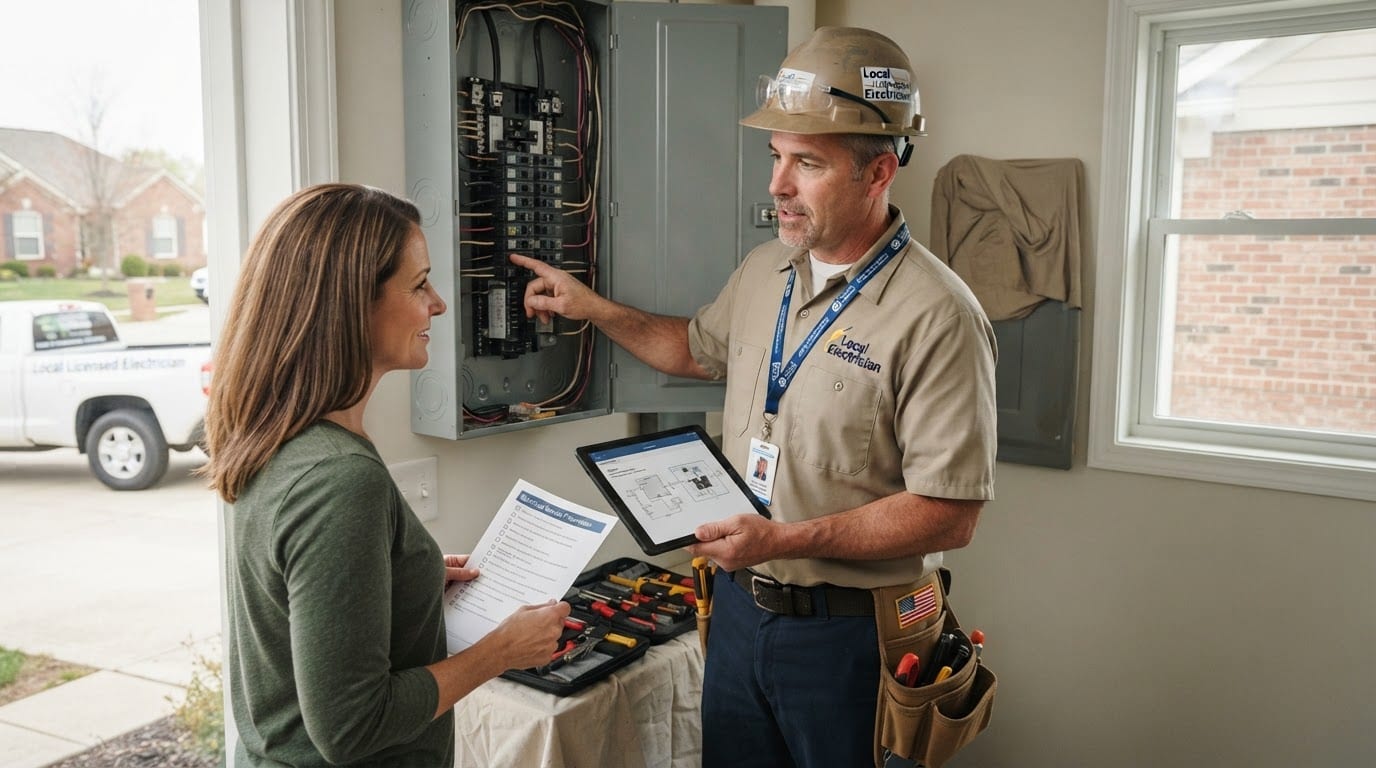
A breaker that trips once during a summer heat wave is usually a nuisance. A breaker that trips every time the dishwasher and the microwave run together is a signal that something in the circuit is failing. Most electrical emergencies do not start as emergencies. They start as small, ignorable symptoms that get worse over months or years, and homeowners who learn to recognize those early signs avoid the most expensive outcomes.
Knowing when to call a local electrician indianapolis is only part of the decision. The rest is understanding what the work should cost, how to confirm the person doing it is qualified, and what a responsible service visit looks like. This guide covers each of those steps with the local context that affects Indianapolis homes and projects.
Before scheduling any work, confirm the contractor’s state license, insurance, and permit practices. zimmermanelectricindy is one example of a local electrical contractor whose published details can be checked against the same criteria outlined here. Asking for the license number, a current certificate of insurance, and a written scope is a reasonable first step with any company, regardless of size.
Recognizing When Electrical Problems Need a Licensed Professional
Some electrical symptoms are safety signals rather than inconveniences. Breakers that trip repeatedly, especially under load, suggest an overcurrent condition, a short, or a ground fault that the protective device is correctly interrupting. Resetting the breaker repeatedly without finding the cause is the wrong response. Warm outlets, warm switch plates, or discoloration around a receptacle often indicate a loose connection or a device operating above its rating. Lights that flicker when a large appliance starts, such as an HVAC compressor or a well pump, point to voltage drop or a poor neutral connection. A burning odor, scorched insulation, or crackling inside a panel or outlet calls for immediate shutdown and professional evaluation.
Homeowners can safely handle a limited set of tasks: replacing a bulb, resetting a single tripped breaker once after confirming the load was unplugged, replacing a battery in a smoke detector, or swapping a plug-in fixture. Anything involving opening a panel, replacing a receptacle or switch, working inside a junction box, or altering a circuit should go to a licensed electrician. Indiana requires electrical work performed for hire to be done by licensed contractors, and unpermitted DIY work can complicate insurance claims later.
Indianapolis housing stock adds specific risk. Many homes built in the early and mid-twentieth century, including bungalows and older frame houses in neighborhoods such as Irvington and Fountain Square, have outdated 60-amp or 100-amp fuse-era panels, cloth-insulated or knob-and-tube wiring remnants, and limited or absent grounding. Aluminum branch wiring, common in homes wired during the late 1960s and early 1970s, can loosen at terminations and overheat when connected to devices not rated for it. An inspection in these homes is inexpensive relative to the cost of a fire, and early evaluation usually costs far less than a reactive repair.
Understanding What Electrical Work Costs Locally
Pricing for electrical work depends on access, code requirements, materials, and the amount of hidden work behind walls. A generic average rarely reflects what a specific job will cost, so the more useful approach is to understand the variables that move the number.
Diagnostic and Service Call Fees
Most residential electricians charge a trip or diagnostic fee to arrive, assess the problem, and provide a quote. In the Indianapolis area, this often falls between $75 and $200, depending on the company and whether the visit is during business hours. A reputable diagnostic visit typically includes a visual inspection of the panel, testing of circuits with a multimeter or clamp meter, checks for proper grounding and polarity using a receptacle tester, and sometimes infrared thermography to identify hot connections. Many contractors credit the diagnostic fee toward the repair if you approve the work. Ask this question directly before the visit.
Major Project Drivers
Several categories of work account for most significant electrical spending:
- Panel upgrades: Replacing an outdated fuse box or a 100-amp service with a 200-amp panel commonly ranges from about $2,000 to $4,500, depending on utility coordination, meter base work, and whether grounding electrode system upgrades are required.
- Partial or whole-home rewiring: Rewiring a section of a house, such as a kitchen and bath circuit set, may run a few thousand dollars. Complete rewiring of a typical older home often costs $8,000 to $25,000 or more because it involves opening walls and plaster.
- Generator transfer switches: A manual or automatic transfer switch installation, excluding the generator itself, often costs roughly $800 to $2,500, with additional cost for a load calculation and inlet or interlock hardware.
- EV charger installations: A Level 2 charger on a dedicated 240-volt circuit commonly ranges from about $600 to $2,000 installed. Costs rise when the panel lacks capacity and needs a load management device or upgrade.
These figures vary with run length, conduit type, permit fees, and local labor rates. Treat them as planning ranges rather than quotes.
Reading an Estimate
A clear written estimate separates labor from materials and identifies every fee. It should list the specific scope of work, the equipment and conductor types (for example, copper THHN in EMT or PVC conduit), the permit fee, and whether the contractor will coordinate the inspection. It should state the timeline, payment schedule, and what is excluded.
Questions are warranted when an estimate offers only a single lump sum with no scope, when permit costs are missing from a panel or service upgrade, when the contractor proposes skipping a permit for work that would normally require one, or when a deposit exceeds a reasonable share of the project before materials are ordered.
Checking Credentials Before Any Work Begins
Confirming credentials takes minutes and protects against the most serious risks of hiring the wrong person. Start with the state license. Indiana electrical contractors are licensed through the Indiana Professional Licensing Agency, and the license status can be verified through the agency’s online lookup. Confirm that the license is active, that the name matches the business entity, and that the license class covers the type of work proposed.
Next, request a current certificate of insurance showing general liability coverage and workers’ compensation. Ask that the certificate list you as certificate holder. Without workers’ compensation, an injured worker on your property could create liability for you. Confirm coverage directly with the carrier if anything looks unusual.
When Permits Are Required
In Marion County, electrical permits and inspections are handled through the Department of Business and Neighborhood Services. Permits are generally required for service upgrades, new circuits, panel replacements, generator interlocks, and most rewiring. Work is inspected against the National Electrical Code as adopted in Indiana, and some jobs require a utility disconnect and reconnect coordinated with the power provider.
Pulling permits protects homeowners in practical ways. Permitted work creates a documented record that matters during resale, when buyers or lenders may request evidence of compliance. It also supports insurance claims, since unpermitted electrical work is a common reason insurers dispute fire-related losses.
What Warranties Should Spell Out
A written warranty should identify the coverage period for workmanship, the parts covered by manufacturer warranties, and what the contractor will do if a failure occurs. Look for language describing response time, whether the warranty transfers if you sell the home, and whether it excludes damage from unrelated causes such as lightning or utility surges. Vague phrases like "satisfaction guaranteed" carry little weight without defined terms.
Training Pathways and Experience
Licensed electricians generally progress through an apprenticeship, typically four to five years, that combines on-the-job hours with classroom instruction covering the NEC, load calculations, and safety. Journeyman electricians have completed the required supervised hours and passed examinations. Many local electricians train through IBEW and NECA-affiliated programs, while others come through independent contractor apprenticeship routes. Safety training under OSHA standards, including 29 CFR 1926 Subpart K for electrical work in construction, is standard for qualified workers.
For career changers and homeowners trying to interpret a credential, the key point is that a license represents verified training hours and exam performance under state supervision, not simply years in the trade. Ask how long the technician has worked independently and whether the company employs journeymen or master electricians for complex work.
Comparing Residential, Commercial, and Emergency Electrical Needs
Electrical contractors often serve different customers with different expectations, and matching your situation to the right service type avoids delays.
Residential work includes repairs, circuit additions, panel upgrades, generator and EV installations, and pre-purchase inspections. The priority is usually safety, homeowner communication, and minimal disruption to daily living.
Commercial work involves tenant build-outs, lighting retrofits, code compliance for occupancy changes, and coordination with building officials, fire marshals, and property owners. Projects frequently require load calculations, emergency lighting verification, and documentation for inspections. Commercial clients generally expect detailed submittals and phased scheduling.
Property managers often arrange maintenance agreements, which set response times, preventive inspections such as infrared scans of panels, and priority levels for repairs. These agreements suit landlords with multiple units because they create a documented maintenance history and reduce emergency calls.
Emergency Response
An after-hours emergency involves a immediate hazard: sparking at an outlet or panel, visible smoke, a burning smell that persists, exposed energized conductors, water entering a panel or device, or a partial outage in which a circuit is still hot but a hazard is present. In those situations, turn off the main breaker if you can do so safely and without standing in water, then call the electrician. If there is fire or smoke, leave the building and call 911 first.
A total outage without other symptoms, a single dead outlet, or a flickering fixture usually can wait for business hours. Ask whether the company offers emergency dispatch and what the after-hours rate is before you need it.
Preparing for a Service Visit and Getting the Most From It
A well-prepared homeowner gets a more accurate diagnosis and a faster visit. Before the technician arrives, clear at least three feet of access around the panel, keep the path to it open, and gather information about the problem.
- Note when the problem occurs, such as during dishwasher use, after rain, or when the HVAC starts.
- Photograph scorch marks, discoloration, or damaged devices before touching anything.
- List prior repairs, previous panel work, and any DIY modifications you know about.
- Have the age of the home and any known wiring type, such as aluminum or cloth-insulated conductors, ready to share.
- Make a list of the circuits or appliances affected.
Before work begins, ask about scope and what is included. Confirm the timeline and whether the contractor expects to complete the work in one visit. Clarify who pulls the permit and who schedules the inspection. Ask how the job will be documented, including whether you will receive photos of concealed wiring before walls are closed, a load calculation for service changes, and a copy of the final inspection approval.
What to Expect at Inspection
For permitted work, an inspector from the local building authority will verify conductor sizing, grounding and bonding, box fill, overcurrent protection, and labeling. Inspections often occur in stages: rough-in, before walls are closed, and final, after devices and panels are complete.
If an inspector fails an item, the correction is usually minor, such as adding a grounding connection or replacing a damaged cable clamp. Ask the electrician to make the correction promptly and schedule a reinspection. Keep the failed-item notice with your records. A contractor who disputes legitimate inspection findings or resists reinspection should raise concern.
Taking these steps does not guarantee a perfect outcome, but it turns a stressful electrical problem into a documented, verifiable project. Indianapolis homeowners who understand the warning signs, the cost drivers, and the credentials that matter are better positioned to hire a qualified electrician and avoid the costly mistakes that come from rushing the decision.
